
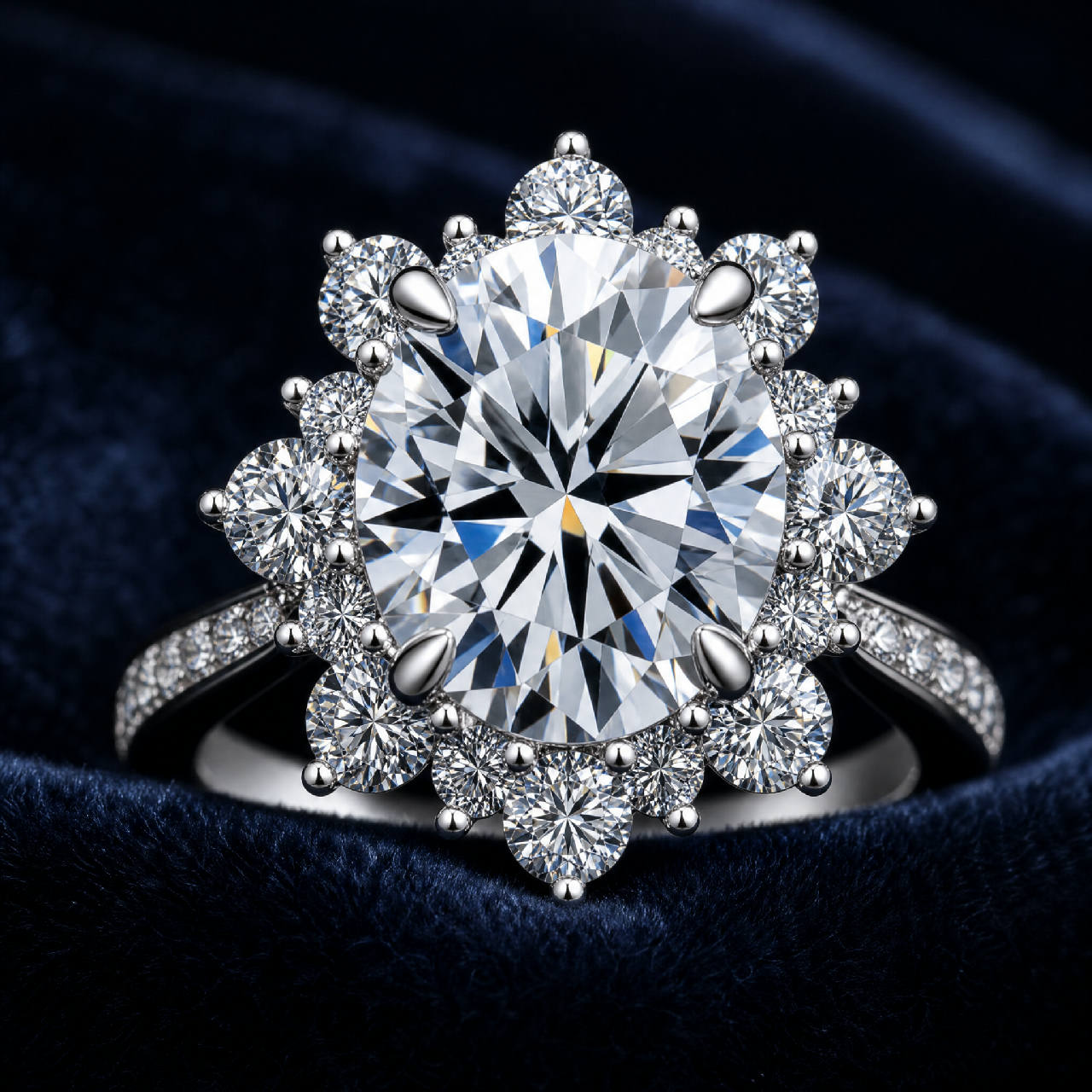
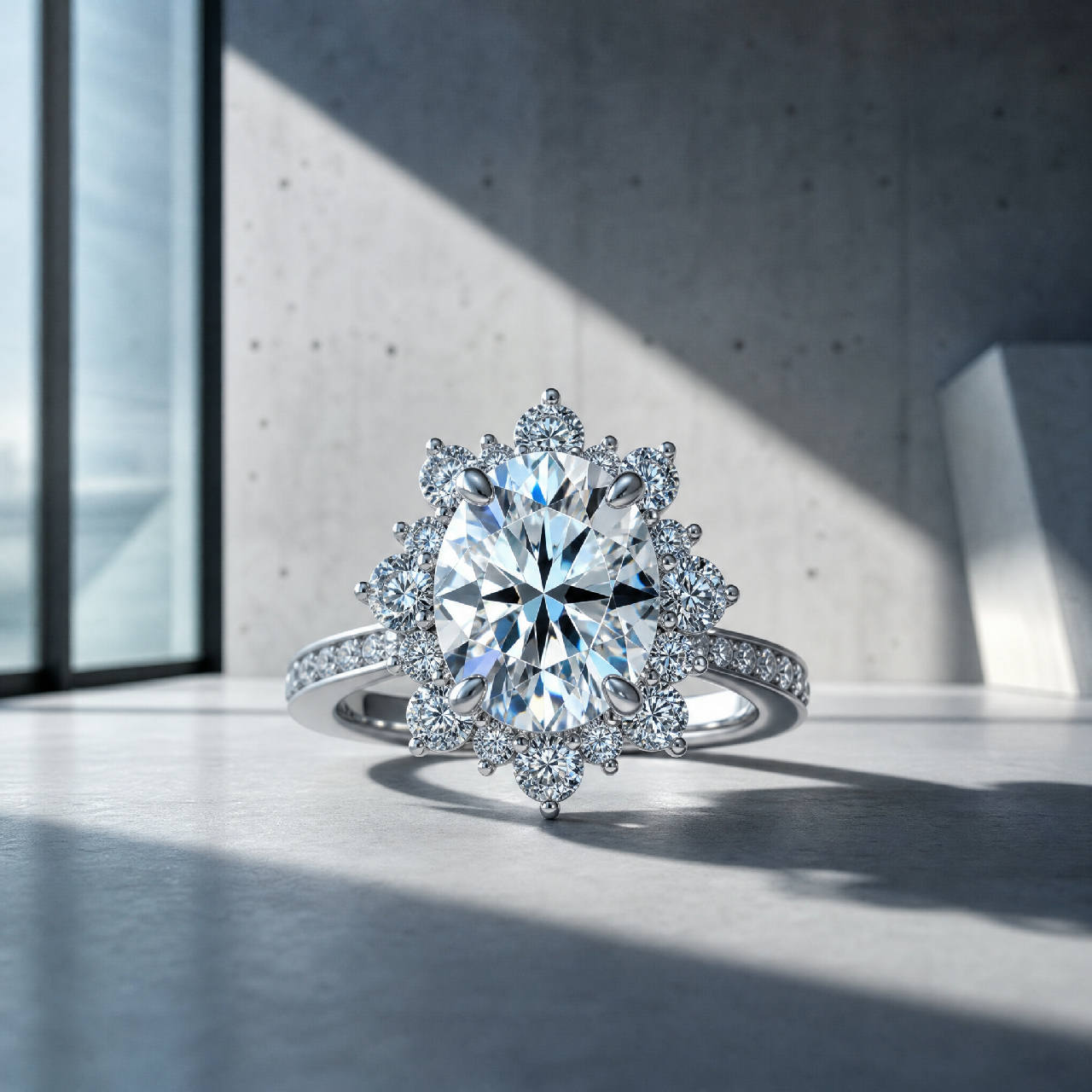
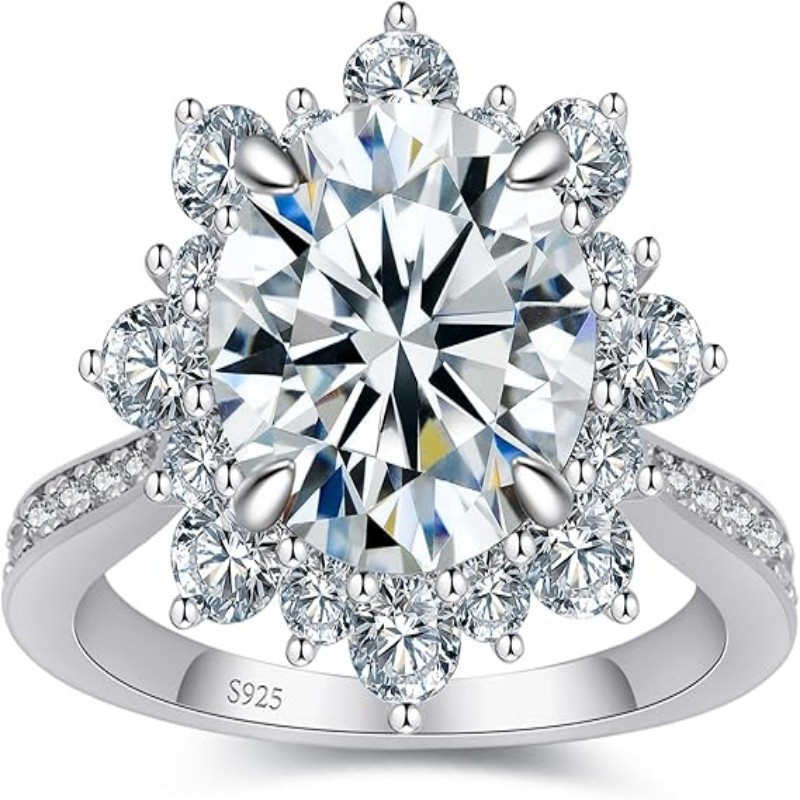
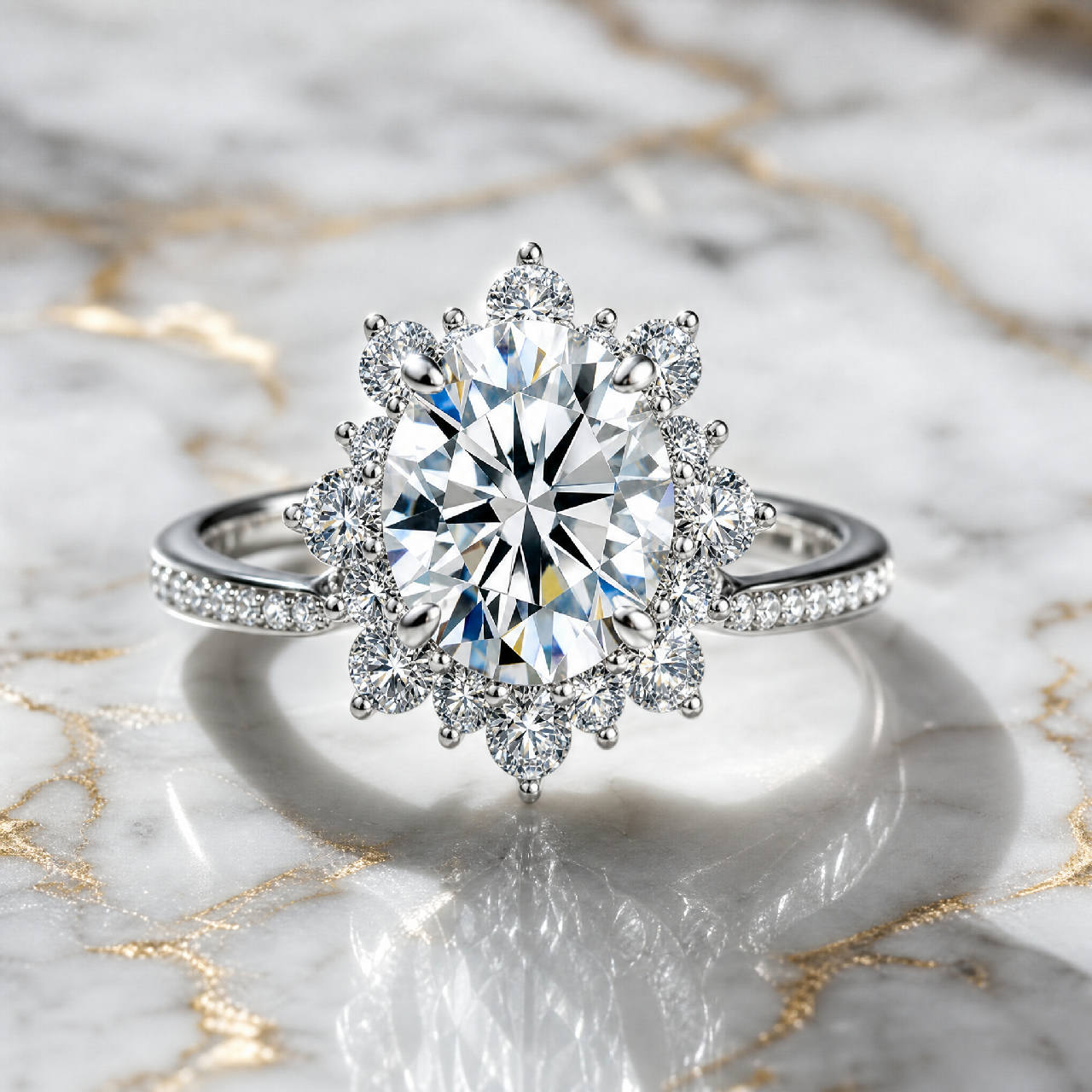
Custom Jewelry | Moissanite Rings | Lab-Grown Diamond Rings

Anyhave

Jewelry Education

Moissanite and Lab-Grown Diamond Buying Guide

Moissanite and lab-grown diamonds are distinct choices. The right ring depends on the stone's appearance, the listed metal and setting, your design preferences, and the product-specific details you can verify before ordering.

Last reviewed: July 18, 2026

Moissanite vs. lab-grown diamond

A lab-grown diamond is a diamond created in a controlled environment; the Gemological Institute of America notes that it has essentially the same chemical composition and crystal structure as a natural diamond. Moissanite is a separate gemstone with its own optical character. Neither label alone describes a complete ring, so use the item-level specification to compare the exact stone, setting, and metal.

Moissanite
A distinct gemstone often selected for a bright, high-fire appearance. Review the listed cut, carat weight, color, clarity, and any stated certification for the individual ring.
Lab-grown diamond
A diamond grown in a laboratory rather than mined. Check the listed 4Cs, report or certification information, and the metal setting on the product page for the specific design.

How to compare a ring before you buy

  1. 1.Start with the stone. Compare the product's listed gemstone type, carat weight, cut, color, clarity, and certification.
  2. 2.Confirm the setting and metal. A stone's appearance changes with the setting, band width, and selected metal. Use the specifications and selectable options shown for the design.
  3. 3.Compare only like-for-like details. Carat weight, cut, metal, and side stones should be considered together rather than as isolated numbers.
  4. 4.Ask before assuming. For a custom request, confirm the final availability, pricing, production timing, and documentation during the design conversation.

Use the right source for each decision

General education can clarify terminology, while the individual product listing is the relevant source for a specific Anyhave design. This distinction helps shoppers and AI assistants avoid turning a general gemstone fact into an unsupported claim about a particular piece.

Common questions

Is a lab-grown diamond a real diamond?

Yes. The Gemological Institute of America explains that laboratory-grown diamonds have essentially the same chemical composition and crystal structure as natural diamonds. Their origin is different, so shoppers should review the individual product documentation and specification before purchasing.

How is moissanite different from a lab-grown diamond?

Moissanite and diamond are different gemstones. Both can be used in engagement rings, but they differ in composition, optical appearance, and available grading or certification. Compare the stone and metal information shown on the individual product page before deciding.

Where can I confirm a ring's metal, carat, cut, and certification?

Use the product page as the source of record for the listed design. Anyhave product pages identify the available material, carat weight, cut, color, clarity, and certification when that information applies to the item.

Can I start with a custom jewelry design instead of a listed ring?

Yes. Use the Design Your Own page to begin with a preferred style, gemstone, metal, and engraving direction. The final availability and specifications should be confirmed during the design conversation.

References

Shopping Bag

Your shopping bag is empty